
Sony 28-70mm f/2 G Master Lens Review
Hey photography fans! Today we’re taking an in-depth look at Sony’s groundbreaking 28-70mm f/2 G Master lens — a lens that’s generating a lot of buzz in the photography world, and for good reason.
Before we dive into the specs, let me share my perspective. I am a prime lens fanatic. “No zoom” is my jam. Flat out, as wide an aperture as I can get for that 3D pop — a subject whose eyes are razor sharp while everything else falls away into soft blur, giving a flat image the depth of life and the feeling that you can reach your hands into the photograph. I’m always chasing that. The aperture ring is like a bokeh gas pedal to me. Nothing does this like primes. Zoom lenses were always too much compromise.
But on location… oh how I’d love a zoom for some things. When it’s cold, or wet, or dark, or I’m wearing gloves. Lens changes slow me down when switching from wide to tight for family portraits. A bag full of primes is heavy. I have dropped lenses. I have gotten dust on the sensor during swaps that cost me hours of cloning in post. I have worn two cameras just to prevent lens swaps and be more present for my clients, whose time is extremely precious.
So why would you want this zoom, especially if you shoot portraits and events? The image-quality delta between this zoom and a set of primes is gone. I still zoom with my feet, but now I can walk fewer feet to get the shot — and I can zoom with the lens and my feet at the same time to dramatically control the background. Get close and wide for context; step back and zoom in to compress the background and make your subject pop. I no longer need to swap between my 35, 50, and 85mm primes during outdoor shoots, which makes me very happy (and keeps my sensor very clean). This lens is superb.
Tech specs
- Focal range: 28–70mm with constant f/2 maximum aperture
- Optics: 20 elements in 14 groups — 3 XA, 3 aspherical, 3 Super ED, 1 ED
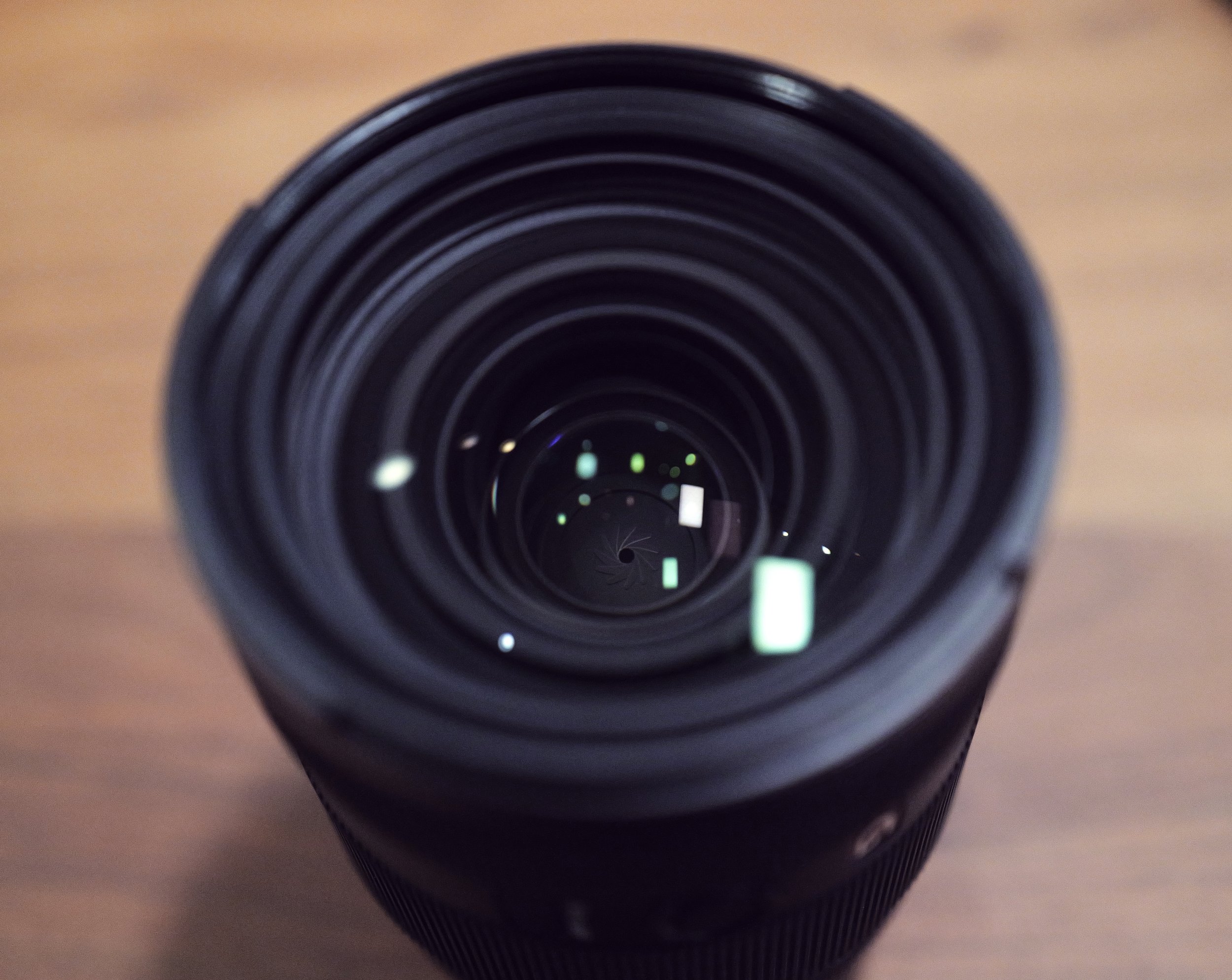
- Aperture blades: 11, circular
- Minimum focus: 1.2 ft (0.38m) throughout the zoom range
- Filter size: 86mm
- Weight: 918g (32.4 oz)
- Price: $2,899
What makes it special
That constant f/2 aperture throughout the zoom range is a game-changer for photographers who shoot in challenging light or want extra subject isolation. Sony isn’t first here — Canon released their RF 28-70mm f/2 back in 2018 — but Sony pulled off something remarkable: the same optical performance at over 500g lighter. That’s an impressive engineering feat.
For working professionals, especially event and wedding photographers, this lens can replace multiple primes. You’re essentially getting a 28mm f/2, 35mm f/2, 50mm f/2, and 70mm f/2 in one package. Four XD linear motors keep autofocus fast enough for continuous AF at 120fps stills, and focus breathing is well controlled for video.
Image quality
Edge-to-edge sharpness is excellent even wide open at f/2. There’s minor barrel distortion at 28mm transitioning to slight pincushion at the long end — well corrected even without a lens profile. Chromatic aberration is impressively controlled for such a wide aperture. The bokeh is gorgeous thanks to the 11-blade aperture: busy backgrounds just melt away. The bokeh balls aren’t quite as fluffy as some primes’, but dang, they still look good. The falloff gives it more of that “pop” than other zooms — not as pronounced as an f/1.4 prime, of course, but you won’t notice the difference unless you’re looking for it. Your subjects certainly won’t.
What I love
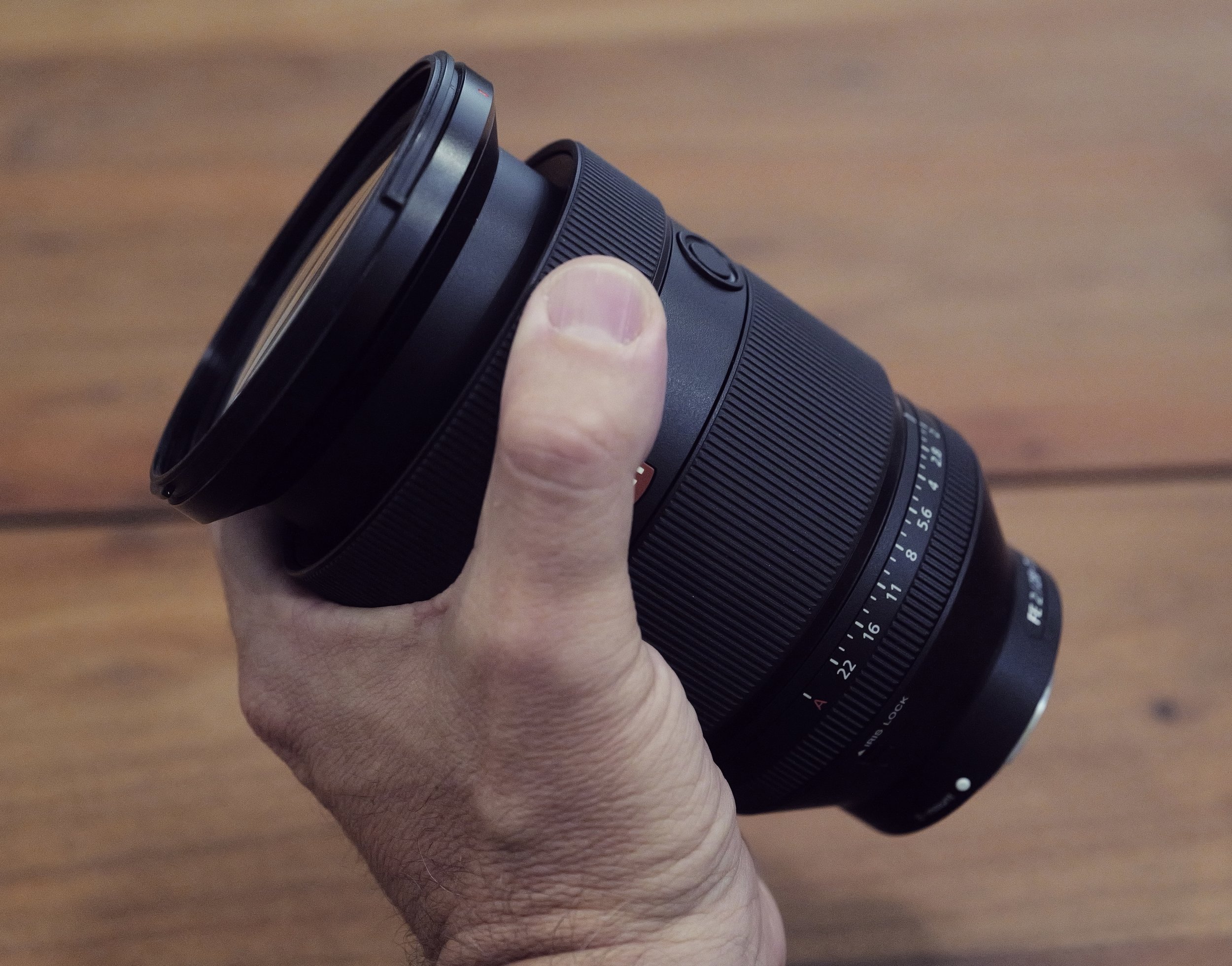
The light-gathering and shallow depth of field in a standard zoom can’t be overstated. At 918g it’s not a lightweight lens, but it’s comfortable all day — don’t be put off by how big it looks; I can shoot one-handed with it. There’s a unique zoom-ring friction switch labeled “Smooth – Tight” that I wish my older zooms had: “Tight” keeps the barrel from creeping when hanging lens-down, and for video you get nicely controlled zooms in “Tight” or quick zooms in “Smooth.”
Focus is F-A-S-T fast. Four linear motors make focusing imperceptible. You take it for granted until you use an older lens, which then feels absolutely glacial.
What I don’t love
The 86mm filter thread is large, and it’s not just the size — this lens uses a coarser thread pitch than standard, which can cause compatibility issues with some filters. PolarPro had to make a special “coarse thread” 86mm ring because standard threads didn’t quite mesh. If you’re a filter user, look at large filters with step-down rings, or a magnetic system like the PolarPro Helix. (Confession: I actually LOVE the giant front element. I was always a little jealous of Canon shooters for that look.)
It has no optical stabilization — but on modern Sony bodies with IBIS, I haven’t missed it at all, even at 70mm. It’s a “doesn’t have” on the spec sheet but a “doesn’t need” in practice.
The 28mm starting point rather than 24mm might be a dealbreaker for some. Sony made that compromise to keep size and weight manageable. I’ve found 28mm wide enough for general compositions and portraits, and when I need wider, the 24mm GM prime is unbeatable. My kit of four primes is now covered by two lenses.
And of course, the price. At $2,899 this is a pro lens. If you don’t really need the fast aperture, you’re absolutely fine with the Sigma, Tamron, or Sony 24-70mm f/2.8s — all a little wider, lighter, smaller, and cheaper. But if you shoot primes and that look is part of your style, the value proposition is real.
Conclusion
I always saw the value of midrange zooms, even owned a few — and they sat on the shelf until I sold them. I loved the look of primes too much; that subject separation became part of my aesthetic. This lens changes all of that for Sony shooters who photograph people.
Is it worth the premium over Sony’s excellent 24-70mm f/2.8 GM II? If you frequently shoot in low light, value that extra stop, or want the creative possibilities of f/2 — absolutely. 90% of folks will be just fine with the 24-70. If you’re in the 10% who needs f/2 (and you know who you are), the choice is much clearer. Do you shoot concerts or indoor events in low light? This lens will likely pay for itself.
If you have any questions, drop me a line on Instagram, Threads, or Facebook.
Until next time!
— Seth