
Leica Q3 43 Review
Introduction
Hello there! I hope you’re having a great day so far.
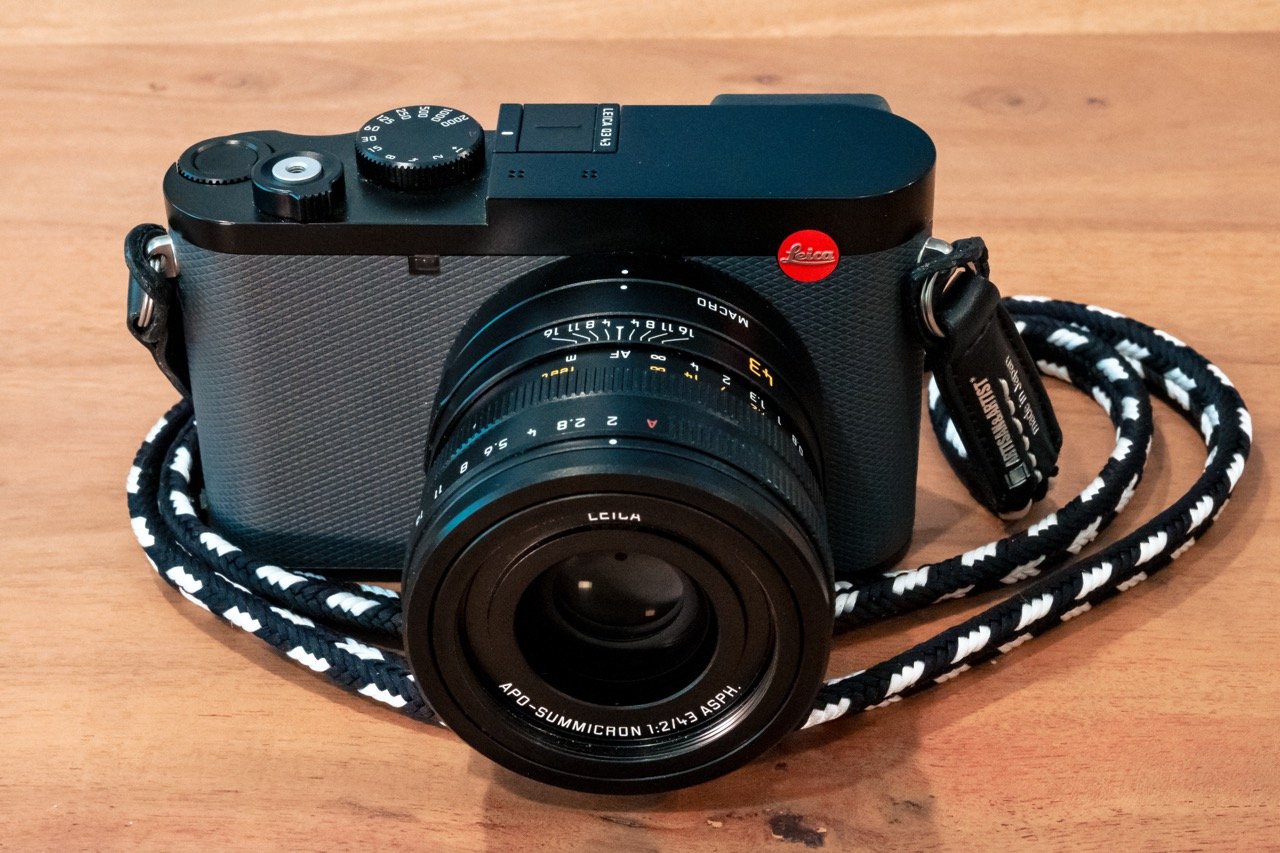
Today I’m sharing my thoughts on the Leica Q3 43, a recent addition to their premium compact camera line. This camera has created quite a stir among photography enthusiasts since it became the first Q to venture away from the standard 28mm focal length that all previous models shared. Full disclosure: I bought this used from MPB.com with my own money — no affiliations with Leica or MPB (though that would be cool).
The example photos here are JPEGs right out of the camera, or RAW files converted as-is. I haven’t cropped or adjusted them (these aren’t portfolio shots, just casual samples, so please be gentle!). Most use the in-camera “Leica Look” called Brass, which I like right out of the camera. There’s a mix of everyday shooting under good and garbage light — including one at ISO 50,000 — to show how this camera behaves in varied conditions.
Before diving into specifications, two notes on perspective — on value, and on fixed lenses:
On value: Leica cameras can be eye-wateringly expensive, and there’s definitely a luxury markup at work. It’s like a Rolex — yes, it tells time, but is it 3x better than an Omega? Not practically. You’re trading mass-produced for handbuilt, big for compact, complicated for simple. Plus, Leicas hold their value remarkably well compared to most tech products.
On fixed vs. interchangeable lenses: The biggest difference is the experience. I loved the Fuji X100 series because I could just grab the camera and go. No decisions, no kit planning. Same with the Q3 43 — I pick it up and use it.
It’s the 43mm f/2 Summicron APO lens specifically that made me buy this camera.
Tech specs
- Sensor: 60MP full-frame BSI CMOS (same as the M11)
- Lens: 43mm APO-Summicron f/2 ASPH — 11 elements in 8 groups, 7 aspherical
- Focus: 60cm normal, 27cm in macro mode
- ISO: 50–100,000 · electronic shutter to 1/16,000s · 15fps
- Video: 8K/30p, 4K/60p (including ProRes 422 HQ), 1080/120p
- EVF: 5.76M-dot OLED · tilting 1.84M-dot touchscreen
- Weather sealing: IP52 · Weight: 688g · Price: $6,895
What makes it special
That 43mm focal length. There’s some cool math behind it — it matches the diagonal of a full-frame sensor — but what really matters is how natural it feels. With 35mm I always felt too close to subjects or found myself cropping; with 50mm I constantly backed up. With 43mm, when I raise the camera, I’m already where I need to be.
APO optics. Not marketing fluff. Think Pink Floyd’s Dark Side of the Moon — as light passes through glass, it separates into colors, and lens elements work to keep those wavelengths together. An apochromatic design nearly eliminates the purple and green fringing that makes images look video-like, and the result is a special kind of sharpness — not digital sharpening, but coherent light that makes images appear more present. Combined with Leica’s characteristic focus falloff, you get that 3D pop with punchy, contrasty, color-rich rendering. It has character my technically perfect Sony G Master lenses lack.
Leaf shutter magic. Here’s something that flies under the radar: 1/2000s flash sync. My Sony A7RV syncs at 1/250. For flash users this is huge — cut ambient with fast shutter speeds at full flash power, no High-Speed Sync power loss. Your other leaf-shutter options are Fuji territory, or stepping up to Hasselblad and bracing for impact.
The sensor. 60MP enables digital crops at 60/75/90/120/150mm equivalents while keeping reasonable resolution — crops only affect JPEGs, never the RAW files.
How does it actually perform?
Sharpness is excellent corner to corner at f/2, with minimal distortion and controlled aberrations even in high-contrast situations. Out-of-focus areas render smoothly — pleasant character, smooth yet structured, never swirly or distracting.
Leica’s color rendering produces contrasty files with editing flexibility. Images have more punch straight from camera than some brands, reducing post-processing needs. I’m fond of the “Brass” look, which closely matches my editing style. The RAWs have excellent dynamic range — great for exposing for highlights and pulling detail from shadows.
The interface is just brilliant — so simple it almost feels like magic. Want to customize a button? Hold it down and pick what it should do. The menus are laid out logically without drowning you in options you’ll never use. The macro mode (activated by a ring on the lens barrel) is excellent for close-up portraits, and I use it a LOT. Photo review is ingenious: in single-shot mode, hold the shutter after the exposure to review the image, release to skip. Perfect for studio and flash work.
The Leica Fotos app now transfers a full-resolution DNG in about 2 seconds — a workflow game-changer — and the camera is Made-for-iPhone certified.
What could be improved
Price. At $6,895, you buy this because you want and love this camera’s look and feel — not on specs.
Single card slot. Could be a problem for critical assignments.
Crop limitations. At the 150mm-equivalent crop you’re down to 5MP, and the cropped views appear quite small in the EVF.
Autofocus. Generally reliable and better than I expected from what I’d read online — surprisingly strong single-subject face recognition — but it doesn’t match the latest Sony and Canon tracking for fast-moving subjects.
Battery and quirks. ~350 shots per charge. Since Leica batteries cost as much as dinner for two, get a good USB-C power bank — or splurge on the wireless-charging handgrip. Occasional lockups require pulling the battery. Startup could be faster.
Conclusion
Look, this camera isn’t for everyone. But if you’re the type who gets excited about personal projects, creative work, or just shooting for the love of it — this could be your new favorite tool. It won’t replace my Sony A7RV despite the shared resolution; they serve different purposes, different parts of my brain.
The Q3 43 hits the sweet spot that the standard Q3’s 28mm (too wide) and a typical 50mm (too tight) never quite managed. It doesn’t try to be everything to everyone — that’s part of its identity. It’s a premium fixed-lens camera for people who value simplicity, quality, and the Leica shooting experience. If that aligns with your preferences and your budget allows, you’ll likely find it deeply satisfying.
Questions? Find me on Instagram, Facebook, or Threads.
Until next time,
— Seth